
In recent times, blockchain technology has gained immense popularity due to its ability to create a secure and transparent digital ledger for recording transactions. The education sector has swiftly recognized the potential of blockchain to transform the way we teach and learn.
Blockchain in Education
Blockchain is a decentralized digital ledger technology used to store and authenticate transaction data. Originally designed to support Bitcoin, it now finds applications in various sectors. It consists of a chain of blocks, with each block containing validated transactions. The use of cryptographic methods ensures the data's integrity, making it extremely challenging to alter. Once a block is added to the chain, it becomes immutable, impacting all subsequent blocks.
Blockchain development offers numerous advantages, including heightened security, transparency, and efficiency. It eliminates the need for intermediaries like banks, reducing transaction costs and speeding up processing. Furthermore, it enables secure and open record-keeping for diverse applications, such as voting systems, supply chain management, and digital identity verification.
Enhanced Security
Cryptographic protection ensures data integrity and prevents tampering
Full Transparency
All stakeholders can verify transactions and records instantly
Improved Efficiency
Eliminates intermediaries and automates verification processes
Five Ways Blockchain Can Revolutionize the Education Industry
Blockchain technology is making significant inroads into various industries, including education. In 2024, it is expected to have a substantial impact on the education sector in several ways:
1. Secure and Verifiable Credentials
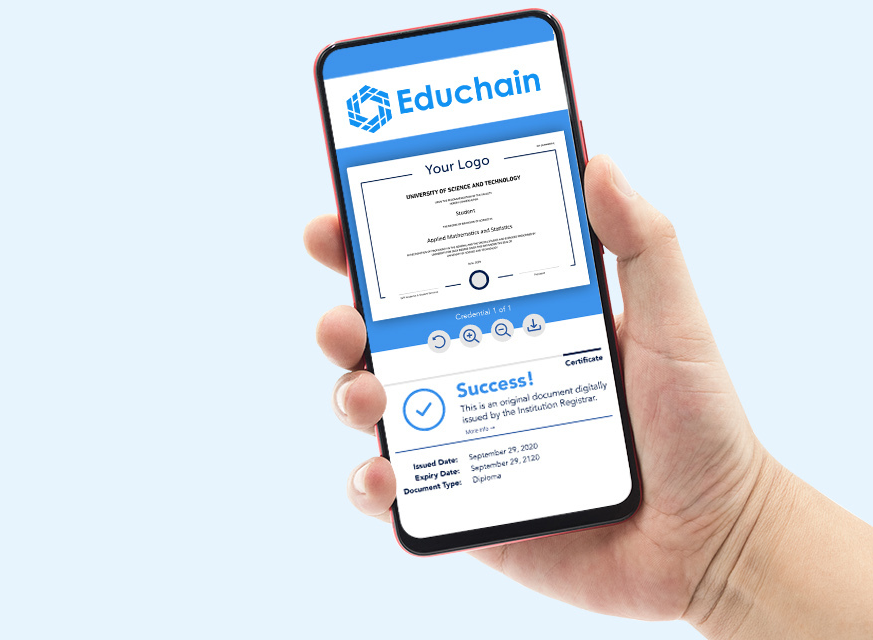
Blockchain enables the creation of tamper-proof digital certificates, eliminating the problem of counterfeit degrees and diplomas. This simplifies the validation of credentials for potential employers.
2. Transparent Records of Achievements
It can establish a decentralized database of academic achievements accessible to all stakeholders, fostering transparency and accountability in education.
3. Streamlined and Automated Student Enrollment
Blockchain platforms can verify student identities and qualifications, reducing administrative tasks, costs, and errors in the enrollment process.
4. Secure and Decentralized Data Storage
Institutions can store data securely and in a decentralized manner, enhancing data security and promoting data privacy.
5. Decentralized Micro-Credentialing
It can provide students with digital badges and certificates for specific achievements, stored on a blockchain-based platform for easy verification.
"Blockchain technology in education represents more than just a technological upgrade—it's a paradigm shift in how we verify, store, and share educational achievements. It puts learners in control of their credentials while ensuring absolute authenticity."
Conclusion
In conclusion, blockchain technology is poised to have a profound impact on the education industry in 2024. It can address various challenges, offering secure, efficient, and transparent systems that benefit all stakeholders in education. As we move forward, the integration of blockchain into educational systems will likely accelerate, creating new opportunities for innovation and improvement in how we learn, teach, and verify educational achievements.